Are Your Facebook Ads Quietly Burning Money Without You Noticing?
Are you running campaigns but unsure where your money is actually going? Many marketers discover too late that their Facebook ads are underperforming due to subtle missteps rather than obvious errors. The short answer: yes, your ad spend could be leaking without clear visibility. From poor audience targeting to weak creative testing, small inefficiencies compound quickly. Having managed multiple campaigns across eCommerce and SaaS, I’ve seen budgets vanish with minimal returns until proper tracking, segmentation, and testing frameworks were applied. This guide explains where things typically go wrong and how to fix them with practical, field-tested strategies.
Why Do Ad Campaigns Lose Money Without Warning?
Weak Audience Targeting
One of the most common issues I’ve encountered in real campaigns is poorly defined targeting. When audiences are too broad, the algorithm struggles to find high-intent users. On the other hand, overly narrow targeting can restrict delivery and inflate costs. In one audit, refining audience segments based on behavior and past engagement improved click-through rates by nearly forty percent within two weeks. This demonstrates how critical audience clarity is to campaign efficiency.
Creative Fatigue Happens Faster Than You Think
Creative fatigue is another silent budget killer. Even high-performing Facebook ads lose effectiveness when shown repeatedly to the same users. As frequency rises, engagement drops because users subconsciously ignore familiar content. In practice, rotating creatives every 10 to 14 days and introducing fresh variations keep campaigns responsive and reduce wasted impressions.
How to Structure Campaigns for Better ROI
Follow the Funnel, Not Guesswork
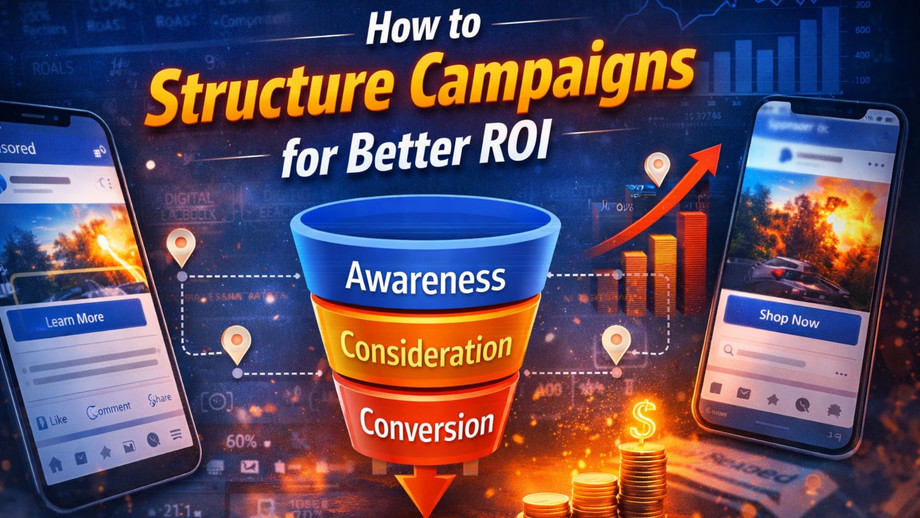
A structured funnel approach consistently delivers better results than random experimentation. Campaigns should guide users from awareness to consideration and finally to conversion. At the top of the funnel, engaging and educational content captures attention. In the middle, retargeting builds familiarity, while bottom-funnel campaigns focus on conversion-driven messaging. This alignment improves relevance and reduces unnecessary spend.
Data Tracking Is Non-Negotiable
Accurate tracking is the foundation of profitable advertising. Without it, optimization decisions are based on assumptions rather than data. Proper implementation of tracking pixels and event prioritization ensures that key actions such as purchases or sign-ups are recorded accurately. In one real-world case, correcting misconfigured tracking reduced the cost per acquisition by over 20%, simply because the algorithm could finally optimize toward the right outcomes.
How Much Should You Really Spend?
Determining the right Facebook ad budget requires balancing testing with performance validation. Spending too aggressively in the early stages often leads to losses because campaigns have not gathered enough data to optimize effectively. A more reliable approach is to begin with a controlled daily budget, monitor performance closely, and scale gradually once consistent results are achieved. From experience, campaigns that stabilize over several days before scaling tend to produce far stronger long-term returns than those pushed too quickly.
What Are the Most Overlooked Optimization Levers?
Placement Optimization
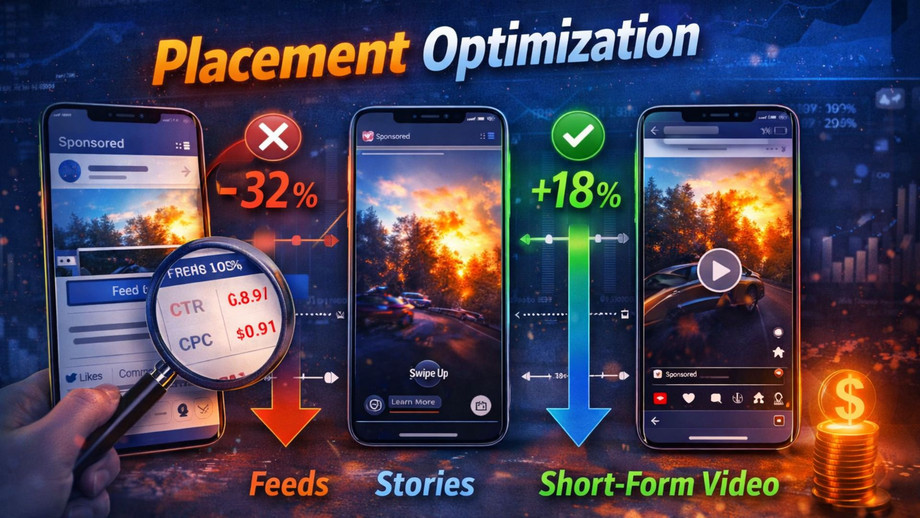
While automated placements are often recommended, they are not always optimal in every scenario. Different placements perform differently depending on the audience and creative format. Analyzing performance across feeds, stories, and short-form video placements can reveal inefficiencies. Removing underperforming placements after sufficient testing often leads to noticeable cost improvements.
Ad Copy That Matches Intent
Another overlooked factor is alignment between messaging and user intent. Awareness-stage users respond better to informative or entertaining content, while conversion-stage users expect clear value propositions and urgency. Mismatched messaging, even with strong visuals, leads to low engagement and wasted impressions. Aligning copy with user intent significantly improves both click-through and conversion rates.
How Professionals Spy and Improve Campaigns
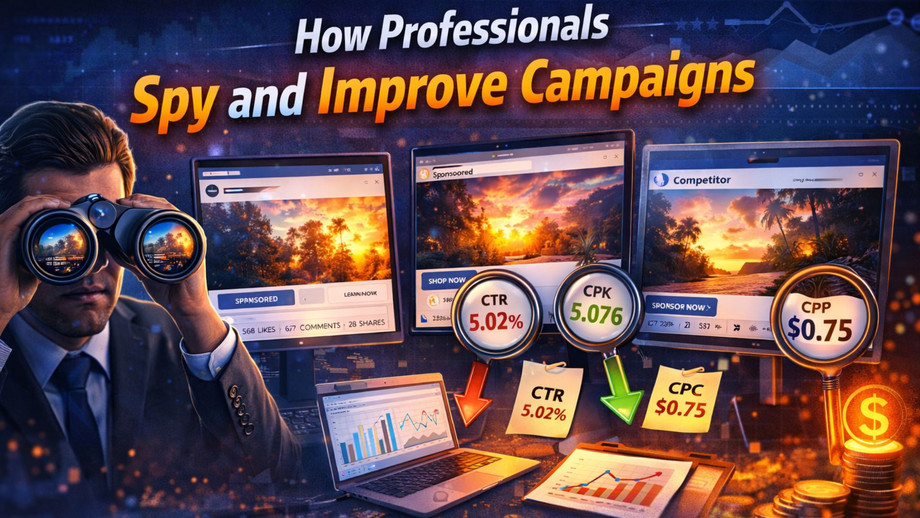
Experienced advertisers rarely rely solely on internal data. They analyze market trends and competitor strategies to refine their own campaigns. This is where tools designed for competitive research become valuable.
Using a Facebook ad spy tool allows marketers to identify high-performing creatives, understand messaging patterns, and spot emerging trends before they become saturated. In one campaign, adjusting the headline based on competitor insights led to a twenty-seven percent increase in conversions, proving that informed inspiration can drive measurable gains.
You can also watch: How To Create User Request For A New Advertisement - How to Tutorial Series | PowerAdSpy
Conclusion
Hidden inefficiencies, rather than obvious mistakes, are what quietly drain advertising budgets. Issues like poor targeting, creative fatigue, and weak tracking often go unnoticed but significantly impact performance over time. By adopting a structured approach, testing consistently, and relying on accurate data, you can transform underperforming campaigns into scalable growth drivers. The key is to remain analytical, patient, and adaptable. When every decision is backed by data and real insights, profitability becomes far more predictable and sustainable.
FAQs
Q: What are Facebook ads and how do they work?
A: They are paid promotions on Meta platforms that target users based on demographics, interests, and behavior. Advertisers bid for placements, and the system delivers ads to users most likely to take actions such as clicking, signing up, or purchasing.
Q: How do I know if my ads are wasting money?
A: You can identify inefficiency by tracking metrics like click-through rate, cost per acquisition, and return on ad spend. Declining engagement, high frequency, and low conversions are strong indicators that your campaigns need optimization.
Q: How much should I spend daily on ads?
A: The ideal daily spend depends on your goals and industry. Start with a moderate testing budget that allows data collection, then gradually increase spending once your campaigns show consistent and stable performance.
Q: What is the biggest mistake beginners make?
A: Many beginners skip structured testing and rely on a single ad variation. Without comparing multiple creatives, audiences, and messaging angles, it becomes difficult to identify what actually drives results.
Q: Are automated placements better than manual ones?
A: Automated placements are useful for initial testing because they maximize delivery opportunities. However, reviewing performance data and excluding weak placements can improve efficiency as campaigns mature.
Q: What is a Facebook ad spy tool, and should I use one?
A: It is a tool that helps analyze competitor advertisements and trends. It provides insights into what works in your niche, but it should be used alongside your own testing and strategy rather than replacing it.


Comments
Post a Comment